
Choosing the right waterproof membrane for concrete is crucial for protecting structures from moisture damage and extending their lifespan. Whether you’re working on a foundation, basement, roof, or any concrete surface exposed to water, the proper waterproofing solution can prevent costly repairs and structural issues. This comprehensive guide explores the various types of waterproof membranes, their applications, advantages, and limitations to help you make an informed decision for your concrete waterproofing project.
What is a Concrete Waterproofing Membrane?
A concrete waterproofing membrane is a protective layer applied to concrete surfaces to prevent water penetration. These membranes create a barrier that shields concrete from moisture infiltration, which can lead to structural damage, mold growth, and deterioration over time. Waterproofing membranes are designed to withstand hydrostatic pressure and provide long-lasting protection for concrete structures.
Concrete itself is porous and susceptible to water infiltration, especially when cracks develop due to settling, temperature changes, or structural stress. A high-quality waterproofing membrane compensates for these vulnerabilities by creating a continuous, impermeable barrier that prevents water from reaching the concrete surface.
What is Waterproof Membrane Used For?
Waterproof membranes serve multiple purposes in construction and building maintenance. Their primary applications include:
- Foundation waterproofing to prevent groundwater infiltration
- Basement wall and floor protection against moisture and flooding
- Roof waterproofing for flat or low-slope concrete roofs
- Plaza deck and podium slab waterproofing
- Swimming pool and water feature waterproofing
- Tunnel and underground structure protection
- Bridge deck waterproofing to prevent corrosion of reinforcing steel
- Bathroom and wet area waterproofing beneath tiles
Properly applied waterproof membranes not only protect against water damage but also help maintain indoor air quality by preventing mold growth, increase energy efficiency by reducing moisture-related heat loss, and extend the service life of concrete structures.

When Should You Use Membrane Waterproofing?
Membrane waterproofing is essential in specific scenarios where concrete structures face significant water exposure or where water infiltration would cause severe damage. Here are the key situations when membrane waterproofing is necessary:
Below-Grade Applications
- Foundations in areas with high water tables
- Basement walls and floors
- Underground parking structures
- Crawl spaces prone to moisture issues
Above-Grade Applications
- Flat or low-slope concrete roofs
- Balconies and terraces
- Planter boxes and green roofs
- Concrete decks over living spaces
Membrane waterproofing is particularly important in regions with heavy rainfall, frequent flooding, or high humidity. It’s also crucial for structures where water damage would compromise safety, such as in commercial buildings, healthcare facilities, and data centers.
Not Sure If You Need Membrane Waterproofing?
Our waterproofing experts can assess your project and recommend the right solution for your specific needs.

Waterproof Membrane vs. Sealant:What is the Difference
When protecting concrete from water damage, it’s important to understand the difference between waterproof membranes and sealants, as they serve different purposes and offer varying levels of protection.
| Feature | Waterproof Membrane | Concrete Sealant |
| Application | Applied as a continuous layer (sheet, liquid, or spray) | Typically brushed, rolled, or sprayed onto surface |
| Thickness | 30-100 mils (0.03-0.1 inches) | 2-3 mils (0.002-0.003 inches) |
| Protection Level | High – creates a complete barrier | Moderate – reduces absorption |
| Hydrostatic Pressure | Can withstand significant pressure | Limited resistance to pressure |
| Crack Bridging | Can bridge cracks up to 1/16″ or more | Limited or no crack bridging ability |
| Lifespan | 10-50+ years depending on type | 2-10 years, requires reapplication |
| Cost | Higher initial investment | Lower initial cost, higher long-term cost |
While sealants penetrate the concrete surface to reduce water absorption, membranes create a physical barrier that completely prevents water penetration. For serious waterproofing needs, especially in below-grade applications or areas with hydrostatic pressure, membranes are the superior choice. Sealants are better suited for above-grade applications with minimal water exposure or as a supplementary measure.

The Best Waterproofing Membranes for Concrete
Several types of waterproofing membranes are available for concrete applications, each with specific advantages and ideal use cases. Here’s a breakdown of the most effective options:
1. Thermoplastic Membranes (PVC and TPO)
Thermoplastic membranes like PVC (Polyvinyl Chloride) and TPO (Thermoplastic Olefin) create a single-layer, seamless waterproofing solution. These membranes can be heat-welded to form continuous barriers without gaps or seams.
Advantages
- Exceptional durability (60+ year lifespan)
- Excellent UV and weather resistance
- High puncture and tear resistance
- TPO offers high solar reflectivity
- Can be integrated with IoT sensors for leak detection
Limitations
- Not ideal for extremely hot climates (deteriorates above 180°F)
- Higher initial cost than some alternatives
- Professional installation required
- No redundancy (single layer)

2. Polyurethane Liquid Membranes
Polyurethane membranes are applied as liquids that cure to form a seamless, flexible waterproof coating. They adhere well to most concrete surfaces and can be applied to complex shapes and details.
Advantages
- Seamless application with no joints
- Excellent adhesion to concrete
- Controllable thickness (as thin as 2mm)
- Flexible and can bridge minor cracks
- Ideal for complex geometries and details
Limitations
- Shorter lifespan (approximately 10 years)
- Sensitive to improper application
- Requires dry, clean surface for proper adhesion
- Long curing time (up to 48 hours)
- Quality varies significantly between products
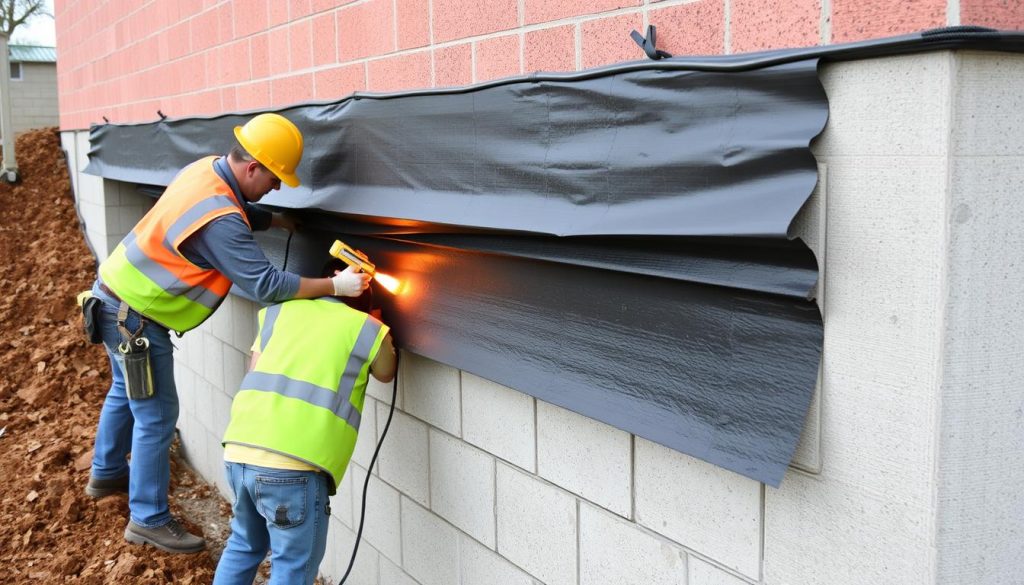
3. Bituminous Membranes
Bituminous membranes are made primarily of asphalt modified with polymers and reinforced with materials like fiberglass or polyester. They are among the most common waterproofing membranes used in construction.
Advantages
- Cost-effective solution
- Good resistance to UV radiation
- Can withstand extreme temperatures
- Easy to install in large areas
- Suitable for high-traffic areas
Limitations
- Relatively short lifespan (10 years)
- Requires multiple layers for durability
- Needs extra UV protection coatings
- Less environmentally friendly
- Can become brittle over time
4. EPDM Rubber Membranes
Ethylene Propylene Diene Monomer (EPDM) rubber is a synthetic rubber membrane known for its flexibility and resistance to tearing or cracking. It’s particularly effective for flat roof applications.
Advantages
- Exceptional flexibility
- Long lifespan (50+ years)
- Excellent temperature stability
- Resistant to UV radiation and ozone
- Low maintenance requirements
Limitations
- Vulnerable to punctures and impacts
- Challenging to install around fixtures
- Requires regular inspections
- Seams can be potential weak points
- Not ideal for areas with petroleum exposure

5. Cementitious Waterproofing
Cementitious waterproofing uses a cement-based polymer coating applied as a liquid epoxy or latex mix. It cures to form a hard, durable seal that’s particularly effective for concrete protection.
Advantages
- Excellent for protecting concrete
- Strong resistance to abrasion and impact
- Can be applied to any angled surface
- Resistant to UV radiation
- Prevents mold and mildew growth
Limitations
- Less flexible than other options
- Prone to cracking in areas with movement
- Complex and time-consuming application
- Difficult to integrate with IoT sensors
- Not ideal for areas with structural settling
6. HDPE Waterproofing Membranes
High-density polyethylene (HDPE) membranes offer excellent waterproofing properties with high puncture resistance and chemical stability. These membranes are typically available in various thicknesses from 30 to 100 mils.
Advantages
- Exceptional chemical resistance
- UV resistant and non-biodegradable
- Resistant to insect and rodent damage
- Will not rot or mildew
- Long material lifespan (100+ years)
Limitations
- Requires careful seaming for watertight connections
- Less flexible than some alternatives
- Installation can be labor-intensive
- Limited to roll widths (typically up to 8 feet)
- Seams can be potential weak points
Compare Waterproofing Membrane Options
Get our detailed comparison guide to help you select the right waterproofing membrane for your specific project requirements.

Disadvantages of Membrane Waterproofing
While waterproofing membranes offer excellent protection for concrete structures, they do have some limitations and potential drawbacks that should be considered:
- Installation Complexity: Many membrane systems require professional installation with specific techniques and equipment, increasing project costs.
- Initial Cost: Quality waterproofing membranes typically represent a significant upfront investment compared to simpler solutions like sealants.
- Vulnerability to Damage: Some membranes can be punctured or torn during installation or by subsequent construction activities.
- Surface Preparation Requirements: Most membranes require extensive surface preparation for proper adhesion, including cleaning, priming, and sometimes leveling.
- Seam Vulnerabilities: Sheet membranes have seams that can become potential weak points if not properly sealed or welded.
- Material-Specific Limitations: Each membrane type has specific vulnerabilities, such as temperature sensitivity, UV degradation, or chemical incompatibilities.
- Inspection Difficulties: Once installed and covered, it can be difficult to inspect membranes for damage or deterioration without specialized equipment.
To mitigate these disadvantages, it’s important to select the right membrane for your specific application, ensure proper installation by qualified professionals, and consider implementing monitoring systems for critical applications.
Lifespan of Waterproofing Membranes
The durability and longevity of waterproofing membranes vary significantly based on material type, quality, installation method, and environmental conditions. Understanding the expected lifespan helps in making cost-effective decisions for your concrete waterproofing project.
| Membrane Type | Average Lifespan | Factors Affecting Durability |
| Thermoplastic (PVC/TPO) | 30-60+ years | UV exposure, temperature extremes, mechanical damage |
| Polyurethane Liquid | 10-15 years | UV exposure, application quality, substrate movement |
| Bituminous | 10-20 years | UV exposure, temperature cycling, number of layers |
| EPDM Rubber | 30-50 years | Puncture damage, seam quality, maintenance frequency |
| Cementitious | 15-25 years | Substrate movement, application thickness, water exposure |
| HDPE | 50-100+ years | Installation quality, seam integrity, mechanical damage |
To maximize the lifespan of your waterproofing membrane, consider these best practices:
- Choose a membrane appropriate for your specific environmental conditions
- Ensure proper surface preparation before installation
- Use qualified professionals for installation
- Implement protective measures during and after installation
- Conduct regular inspections and maintenance
- Address damage promptly to prevent larger issues
- Consider redundant systems for critical applications

Ideal Thickness for Waterproof Membranes
The thickness of a waterproof membrane significantly impacts its performance, durability, and ability to withstand hydrostatic pressure. Different applications require specific thickness standards to ensure adequate protection.
Standard Thickness Measurements
Waterproofing membrane thickness is typically measured in mils (1/1000 of an inch) or millimeters:
| Thickness in Mils | Thickness in Inches | Thickness in mm | Typical Applications |
| 30 mil | 0.03″ (1/32″) | 0.76 mm | Light-duty applications, vapor barriers |
| 40 mil | 0.04″ (3/64″) | 1.02 mm | Standard residential waterproofing |
| 60 mil | 0.06″ (1/16″) | 1.52 mm | Commercial applications, moderate hydrostatic pressure |
| 80 mil | 0.08″ (5/64″) | 2.03 mm | Heavy-duty commercial, high hydrostatic pressure |
| 100 mil | 0.10″ (3/32″) | 2.54 mm | Critical applications, extreme conditions |
Recommended Thickness by Application
Different waterproofing scenarios require specific membrane thicknesses:
Below-Grade Applications
- Residential Foundations: 40-60 mil
- Commercial Foundations: 60-80 mil
- High Water Table Areas: 80-100 mil
- Tunnels and Underground Structures: 80-100 mil
Above-Grade Applications
- Concrete Roofs: 60-80 mil
- Balconies and Terraces: 40-60 mil
- Planters and Green Roofs: 60-80 mil
- Swimming Pools: 60-80 mil
It’s important to note that these are general guidelines, and specific project requirements may vary based on local building codes, environmental conditions, and structural considerations. Always consult with a waterproofing professional to determine the optimal membrane thickness for your specific application.
Choosing the Best Waterproof Membrane for Your Concrete Project
Selecting the optimal waterproof membrane for concrete requires careful consideration of multiple factors including the specific application, environmental conditions, budget constraints, and long-term performance requirements. There is no one-size-fits-all solution, as each project has unique challenges and requirements.
For below-grade foundations with significant hydrostatic pressure, HDPE or thermoplastic membranes offer superior protection and longevity. For roofs and exposed applications, EPDM or TPO membranes provide excellent UV resistance and flexibility. Liquid-applied polyurethane membranes excel in complex geometries and details where sheet membranes would be difficult to install.
Whatever membrane type you choose, proper installation is crucial for effective waterproofing. Even the highest quality membrane will fail if installed incorrectly. Consider working with experienced professionals who specialize in your chosen membrane system to ensure optimal results.
Regular inspection and maintenance will extend the life of your waterproofing system and help identify potential issues before they lead to significant damage. By understanding the strengths and limitations of different membrane options, you can make an informed decision that provides reliable, long-lasting protection for your concrete structures.
Get Expert Waterproofing Consultation
Our waterproofing specialists can help you select and install the best membrane solution for your concrete project.